

Key Takeaways
- Your vehicle's manufacturer maintenance schedule is found in the owner's manual, not the service shop's upsell sheet.
- Schedules list services by mileage intervals and sometimes by time elapsed, whichever comes first.
- "Severe" and "normal" driving conditions affect how frequently many services are actually needed.
- Understanding what each listed service involves helps you evaluate whether recommended work is genuinely due.
- Keeping a record of completed services protects resale value and helps you track what's coming next.
What you will need
Where to Find Your Actual Maintenance Schedule
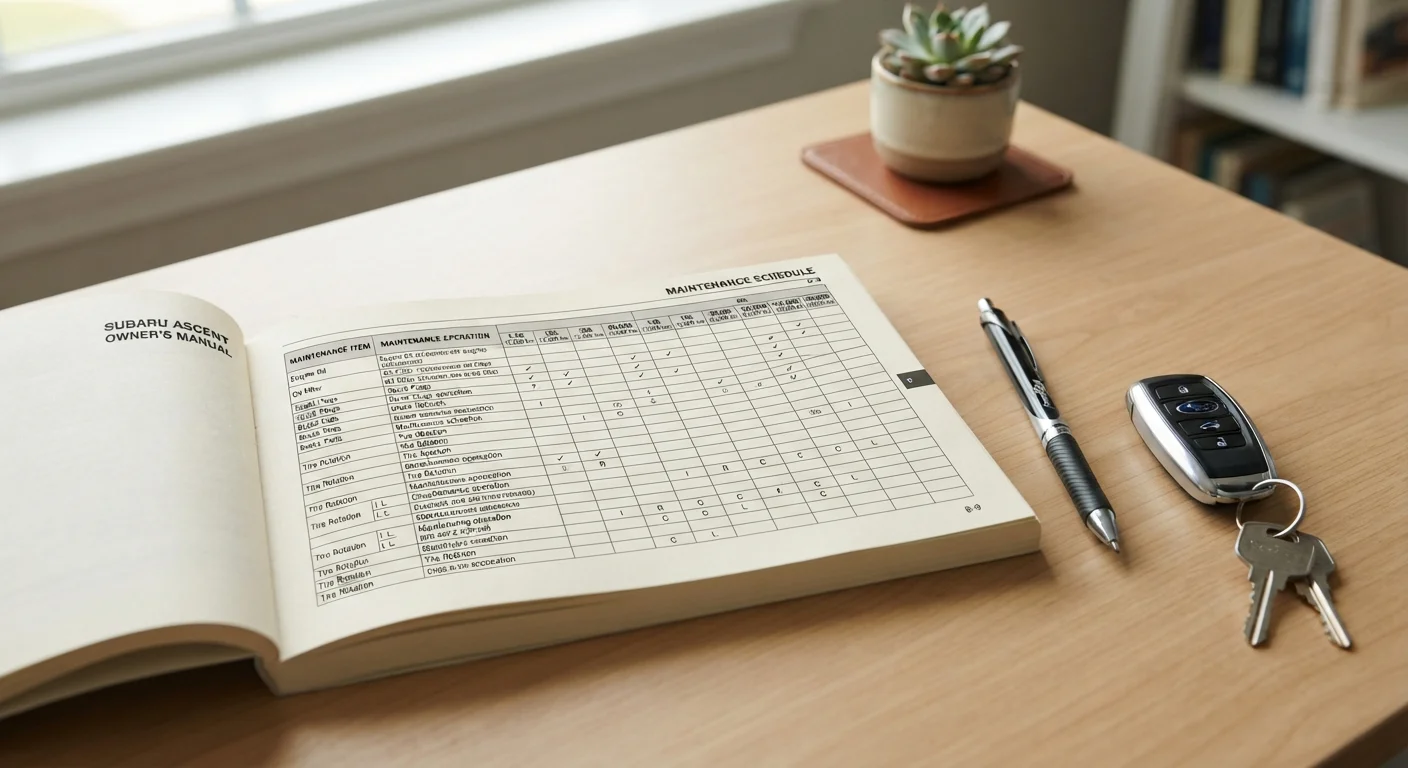
Most drivers rely on a sticker in the windshield or a shop's recommendation to tell them when service is due. Those can be helpful reminders, but neither is the authoritative source - your vehicle's owner's manual is. It contains the manufacturer's maintenance schedule, typically in a dedicated section titled something like "Scheduled Maintenance" or "Maintenance Requirements."
If your manual is missing, most automakers make the schedule available through their official website by entering your vehicle identification number (VIN) or year, make, and model. Some newer vehicles also display a maintenance reminder system in the instrument cluster, though this supplements rather than replaces the printed schedule.
If you're new to car ownership and haven't spent much time with the manual yet, our guide for first-time car owners covers other ownership details that often catch drivers off guard.
What you will need
How to Actually Read the Schedule
Manufacturer maintenance schedules are formatted as tables or checklists. Here's how to interpret the key elements:
Mileage and Time Intervals
Services are triggered by mileage (e.g., every 5,000 or 30,000 miles) or by elapsed time (e.g., every 12 months), whichever comes first. A driver who covers only 5,000 miles a year still needs to change their oil if the time interval is reached. Don't skip the time-based column - it exists for low-mileage drivers.
Normal vs. Severe Driving Conditions
Most schedules include two tracks: normal and severe (sometimes called "special operating conditions"). Severe doesn't mean racing - it typically covers frequent short trips under five miles, stop-and-go city driving, towing, dusty environments, or extreme temperature operation. Many urban commuters actually qualify as severe-condition drivers, which means more frequent service intervals for items like engine oil, transmission fluid, and air filters.
Service Codes and Abbreviations
Schedules often use letter or number codes that correspond to a legend elsewhere in the manual. Code "A" might mean an oil change and tire rotation; code "B" might add an inspection of belts and filters. Always cross-reference the code with the legend - don't assume you know what it covers.
Locate the maintenance schedule section in your manual
Open the owner's manual and use the table of contents to find the maintenance or scheduled service section. It may be near the back. If you're using a digital version, search for "maintenance schedule" or "service intervals."
Note your current mileage and the date of your last service
Write down your odometer reading and, if you have records, when and at what mileage each service was last performed. This tells you where you fall within each interval.
Determine whether you fall under normal or severe driving conditions
Read the definitions in your manual for both categories. Check whether your daily driving patterns - short trips, frequent idling, dusty roads, towing - qualify you as a severe-condition driver. Use the corresponding column in the schedule.
Decode any service codes using the manual's legend
If the schedule uses codes (letters, numbers, or symbols), locate the corresponding legend - usually on the same page or in the adjacent section. Write out what each code means before moving on.
List what is currently due or overdue
Cross-reference your current mileage and the time elapsed since each service against the schedule. Create a simple list of what needs to be done now versus what is coming up in the next 5,000-10,000 miles.
Use your list when speaking with a service advisor
Bring your notes to the shop. When a service advisor recommends work, ask which item in the manufacturer's schedule it corresponds to. If a recommendation doesn't appear in the manual, ask for an explanation before agreeing to it.
Common Services and What They Involve
Understanding what each service actually does helps you have an informed conversation with a mechanic and avoid agreeing to work that isn't yet due.
- Oil and filter change: Removes degraded engine oil and replaces it. Interval varies by oil type - conventional, synthetic-blend, or full synthetic - and the vehicle's requirements. Check your manual rather than defaulting to a generic "every 3,000 miles" rule, which is outdated for most modern vehicles.
- Tire rotation: Moves tires between positions to even out wear. Typically every 5,000-7,500 miles.
- Air filter replacement: Engine air filters protect the intake; cabin air filters affect interior air quality. These are separate items with different intervals.
- Spark plug replacement: Standard plugs may need replacement around 30,000 miles; iridium or platinum plugs may last up to 100,000 miles. Your schedule specifies which applies.
- Transmission fluid: Often overlooked. Some manufacturers list this as a sealed-for-life component; others specify changes at high mileage. Confirm in the manual.
- Coolant flush, brake fluid, and timing belt: These are longer-interval items - typically 60,000-100,000 miles - but missing them can lead to costly damage.
For owners of older vehicles, understanding which of these services carry the most consequence is especially relevant. Our article on owning a high-mileage vehicle covers how the math changes as cars age.
Manufacturer Schedule vs. Shop Recommendations
Service shops sometimes recommend intervals shorter than the manufacturer specifies - especially for oil changes or fluid flushes. While conservative servicing rarely hurts, it can add up in cost. The manufacturer's schedule reflects engineering requirements for that specific vehicle, and it's a reliable baseline for what is genuinely necessary.
Staying on Track Going Forward
Once you've read the schedule and identified what's due, the next step is building a system to track it. A simple spreadsheet or even a notes app log - recording the date, mileage, and service performed - is sufficient for most drivers. More importantly, keeping receipts and documentation creates a service history that supports resale value and helps lenders or buyers verify the vehicle's condition.
Our companion piece on keeping maintenance records explains what to retain and how to organize it effectively.
It's also worth knowing that following the manufacturer's schedule doesn't guarantee you'll avoid all repair costs - particularly on newer vehicles with advanced systems. Our piece on why newer cars aren't always cheaper to maintain puts that assumption in perspective. And if a warning light appears between scheduled services, our dashboard warning light reference can help you interpret what the vehicle is signaling before your next shop visit.