

Key Takeaways
- Mise en place means prepping all your ingredients before turning on the stove.
- It reduces cooking mistakes, forgotten steps, and last-minute scrambling.
- Even a loose version of this habit can dramatically calm the cooking experience.
- Small prep bowls or ramekins make mise en place easy to practice at home.
- Reading through the full recipe first is a key part of effective prep.
Mise en Place
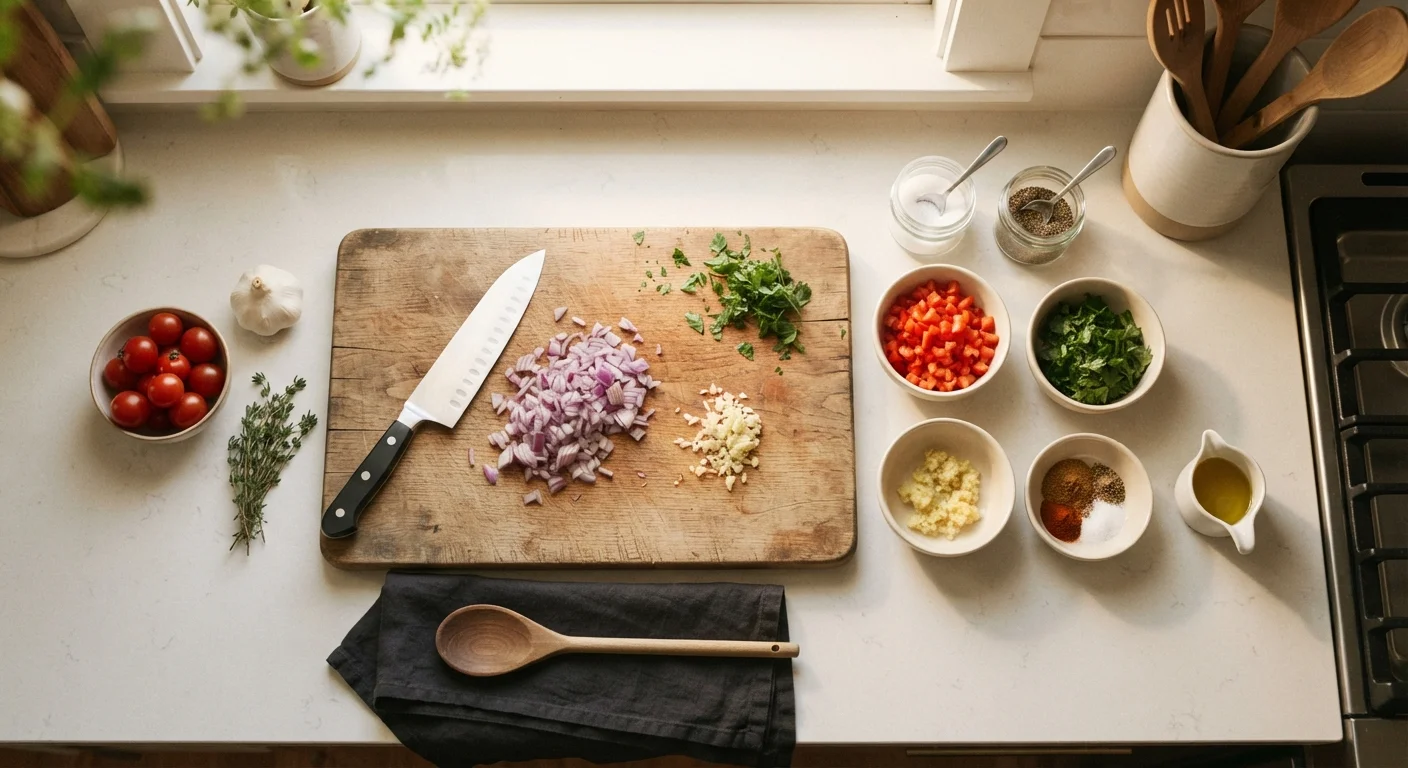
Mise en place (pronounced meez-ahn-plahs) is a French culinary phrase meaning "everything in its place." It refers to the habit of gathering, measuring, and prepping every ingredient before you begin cooking. Rather than scrambling for the garlic while your onions are burning, you've already done the chopping, measuring, and organizing ahead of time.
In professional kitchens, mise en place extends beyond ingredients to include tools, equipment, and even workflow sequence - but for home cooks, the ingredient-prep dimension is what matters most.
Why So Many Home Cooks Feel Overwhelmed Mid-Recipe
You're sautéing onions, the pan is hot, and the recipe suddenly says "add two cloves of minced garlic." You haven't minced the garlic yet. Now you're frantically chopping while the onions edge toward burnt - and the stress that follows is completely avoidable.
This kind of mid-cook scramble is one of the most common pain points for beginner home cooks. It's not a skill problem; it's a sequencing problem. And mise en place is the simple fix. If you're still building your foundational kitchen habits, reading a recipe like a cook - not just scanning it - is a natural companion skill that sets the stage for effective prep.
What Mise en Place Actually Looks Like in a Home Kitchen
You don't need a restaurant setup to practice this habit. The home version is refreshingly simple: read through your entire recipe, then do all the chopping, measuring, and organizing before you touch the stove.
Practically, it looks like a row of small bowls on your counter - each one holding a prepped ingredient. Minced garlic in one. Measured soy sauce in another. Sliced peppers ready to go. When a step in the recipe says "add," you just pour instead of pause.
Start Small: One Bowl Per Ingredient
You don't need a full set of matching ramekins. Repurpose small cups, muffin tin cups, or the lids of jars as prep vessels. The point is simply to separate and organize each ingredient before cooking begins. As the habit becomes natural, you'll instinctively set up your workspace this way without thinking about it.
For a structured approach to getting your kitchen ready before any recipe, the prep checklist for beginners walks you through exactly what to do before the first burner goes on.
The Real Benefits Go Beyond Avoiding Burnt Garlic
Mise en place isn't just about preventing mistakes - it actively makes cooking more enjoyable. When all the prep is done, the cooking itself becomes almost meditative. You're focused on heat, texture, and taste rather than logistics.
It also makes it easier to taste as you go, because your hands are free and your attention isn't split. You'll also waste less food - pre-measuring helps you spot when you're short on an ingredient before it's too late to adapt.
~70%
Home cooks who report stress during meal prep
A survey by the American Psychological Association found that a significant proportion of adults cite time pressure and disorganization as top stressors in weeknight cooking.
5-10 min
Typical mise en place prep time for a simple weeknight meal
Culinary educators generally note that a short investment in prep before cooking pays back in smoother, faster, and less error-prone execution.
Building this habit early pays off. Whether you're working through your first week of cooking at home or just trying to make weeknight dinners less stressful, mise en place gives you a calmer, more confident foundation. A well-organized kitchen - paired with the right pantry staples - means prep goes even faster.
“Give me six hours to chop down a tree and I will spend the first four sharpening the axe. The same logic applies in the kitchen - preparation is the work.”
— Jacques Pépin, Legendary French-American chef and culinary educator