

Key Takeaways
- Ethernet consistently delivers lower latency and more stable speeds than Wi-Fi in most home environments.
- Wi-Fi has improved significantly with newer standards, but interference and distance still limit it.
- The gap between wired and wireless matters most for gaming, video calls, and large file transfers.
- For casual browsing and streaming on a strong Wi-Fi signal, the practical difference is often minimal.
- Running an Ethernet cable is straightforward in many homes and requires no special technical knowledge.
Our Verdict
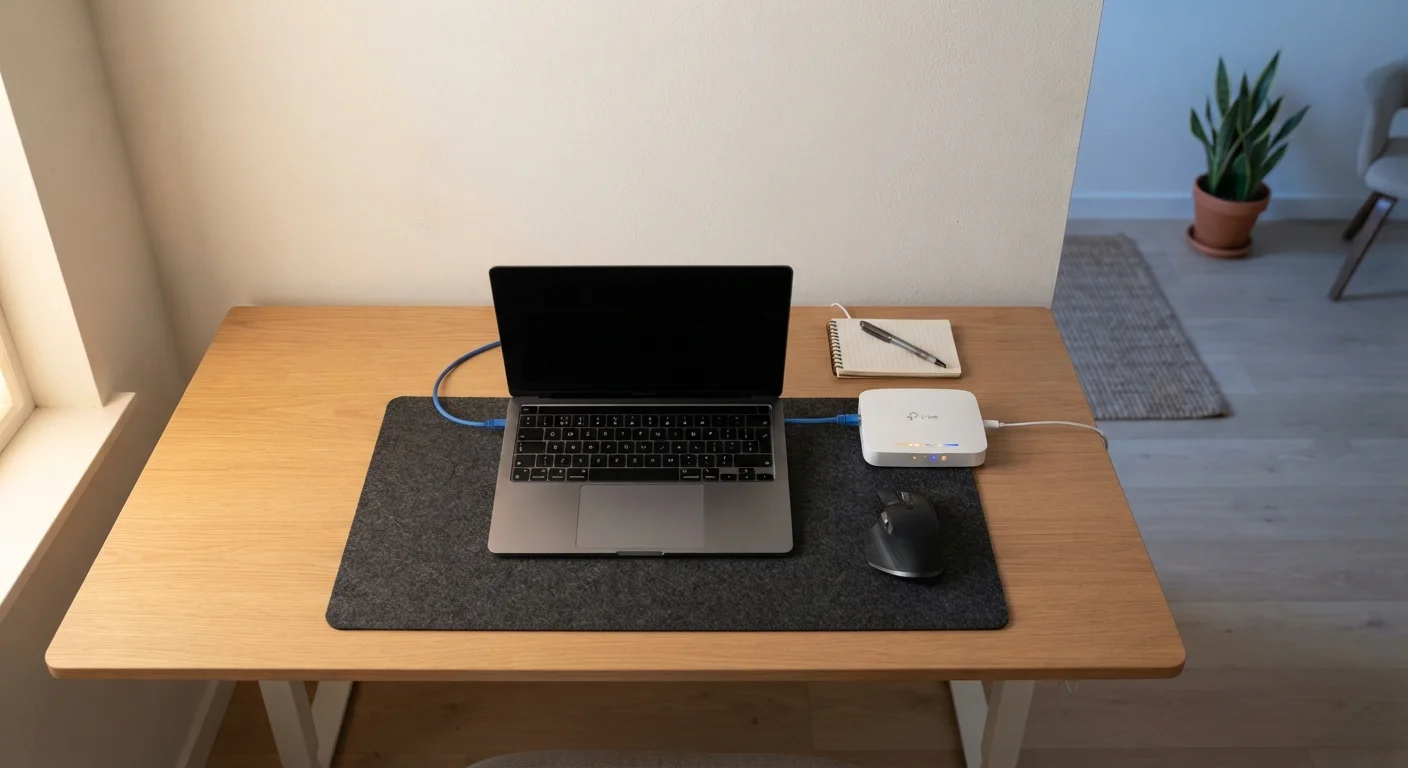
Ethernet wins on raw stability and latency, making it the smarter choice for desks, gaming setups, and any device that sits in one place. Wi-Fi remains the practical solution for phones, tablets, and anything that moves around the home. The best home network often uses both - Ethernet for stationary devices and Wi-Fi for mobile ones.
| Best for | Recommended |
|---|---|
| Gamers and those in competitive online environments | Ethernet |
| Remote workers relying on stable video calls | Ethernet |
| Phones, tablets, and devices used around the home | Wi-Fi |
| Casual browsing and streaming near the router | Either - difference is minimal |
What Actually Separates Wired from Wireless
When you plug an Ethernet cable into your router and laptop, your data travels along a physical, dedicated path with almost no interference. Wi-Fi, by contrast, broadcasts radio signals through the air - and those signals compete with neighboring networks, microwave ovens, walls, and distance.
The two most meaningful differences are latency (how long it takes a signal to travel back and forth) and consistency (whether that performance holds steady over time). Ethernet typically delivers single-digit millisecond latency and virtually no packet loss under normal home conditions. Wi-Fi latency varies depending on signal strength, congestion on the wireless channel, and how many devices are connected at once.
Speed itself is often where people focus first, but raw download speed is rarely where Wi-Fi falls short. A modern Wi-Fi 6 router can deliver hundreds of megabits per second in ideal conditions. The issue is that those conditions fluctuate - and for some activities, fluctuation is the real problem. See common Wi-Fi myths for more on why signal bars don't tell the whole story.
When the Difference Is Genuinely Meaningful
For certain use cases, switching to Ethernet produces a noticeably better experience:
- Online gaming: Even small spikes in latency - called jitter - can affect fast-paced games. A wired connection keeps response times steady and predictable.
- Video conferencing: Dropped frames, frozen screens, and audio cutting out are often caused by momentary Wi-Fi instability rather than low overall speeds. Ethernet smooths these out reliably.
- Uploading or downloading large files: Sustained, stable throughput matters here. Wi-Fi connections can throttle mid-transfer due to channel congestion.
- Smart home hubs and always-on devices: A device that needs to stay consistently reachable benefits from a wired link that doesn't depend on wireless conditions.
| Ethernet (Wired) | Wi-Fi (Wireless) | |
|---|---|---|
| Latency | Very low, typically 1-5 ms | Variable, often 10-50+ ms |
| Speed consistency | Highly stable | Fluctuates with interference |
| Setup effort | Requires physical cable run | No cabling needed |
| Device mobility | Device must stay tethered | Full freedom of movement |
| Interference susceptibility | None in normal use | Walls, devices, neighbors affect it |
| Best suited for | Gaming, video calls, large transfers | Mobile devices, browsing, streaming |
If your home router is far from your workspace or separated by multiple walls, the gap between wired and wireless performance widens further. Router placement has a bigger effect on Wi-Fi quality than most people expect.
When Wi-Fi Is Perfectly Fine
Wi-Fi has become remarkably capable. For everyday tasks, the practical difference between a good wireless connection and a wired one is hard to notice:
- Streaming video: Even 4K video requires only 25 Mbps or so. A stable Wi-Fi connection well above that threshold streams without visible quality loss.
- General browsing and social media: Web pages load from servers around the world - the milliseconds saved by Ethernet are dwarfed by the time it takes the server itself to respond.
- Mobile devices: Phones and tablets aren't designed to connect via Ethernet in everyday use, so Wi-Fi is simply the practical default.
Test Your Current Wi-Fi Before Cabling
Before running Ethernet, run a speed test and a ping test from your device's current location. Many free tools let you check both download speed and latency simultaneously. If your speeds are high and latency is steady below 30 ms, Ethernet may offer only a marginal real-world improvement for casual use. If you see wide swings in both numbers, a wired connection is likely to make a tangible difference.
If you're experiencing issues and can't run cable, there are middle-ground options. Mesh networks, range extenders, and powerline adapters each address dead zones in different ways - worth understanding before committing to a full wiring project.
Making the Switch: What It Actually Involves
Running Ethernet doesn't have to mean tearing up walls. Many setups work well with a cable routed along baseboards or through a doorway. A standard Cat 6 cable - the type widely available at electronics and hardware stores - handles gigabit speeds comfortably for most home setups.
For devices in rooms far from the router, powerline adapters offer an alternative: they send a network signal through your home's existing electrical wiring and can be a reasonable compromise when cable-running isn't practical.
If you're curious how your home internet connection type fits into all of this, understanding your connection type - fiber, cable, DSL, or fixed wireless - gives useful context for what you can realistically expect from either wired or wireless setups.
The bottom line: adding even one or two wired connections for your most demanding devices can noticeably stabilize your home network, without requiring a major setup overhaul.