
Small Space, Smarter Habits: Organization Principles for Apartments and Tiny Homes

Key Takeaways
- Editing what you own is the foundation of every successful small-space organization system.
- Vertical space and multi-use furniture are underutilized assets in most apartments and tiny homes.
- Consistent daily habits - not one-time overhauls - are what keep small spaces functional long term.
- Assigning every item a fixed home prevents clutter from accumulating on surfaces.
- Renters and small-space dwellers can organize effectively without making permanent changes to a property.
Why Small Spaces Demand a Different Approach
In a larger home, clutter has room to hide. A spare bedroom absorbs overflow; a wide hallway tolerates a pile of shoes. In an apartment or tiny home, there's nowhere for disorder to disappear - which means every item you own competes for limited space, and every habit you keep (or skip) is immediately visible in how your home feels.
The good news is that constraint is actually a useful design pressure. Residents of small spaces who develop solid organization habits often report feeling less overwhelmed than those in larger homes, because they've been forced to be deliberate about what they keep and where it lives. Research into environmental psychology suggests that your physical surroundings influence your daily decisions far more than motivation alone - making your space work with you, not against you, is the real goal.
The principles below aren't about owning less for its own sake. They're about building habits and systems that give every square foot a clear purpose.
Core Organization Practices for Small Spaces
These practices apply whether you're in a 400-square-foot studio or a 700-square-foot two-bedroom apartment. The more consistently you apply them, the less effort maintenance requires over time.
Edit your belongings before adding any new storage.
Adding bins and baskets to an overstuffed space just relocates the problem. Reducing what you own - even modestly - creates breathing room that no organizational product can manufacture. The fewer decisions your storage system has to make, the more reliably it holds.
Give every item a fixed, specific home.
Clutter accumulates when items don't have an assigned place to return to. When everything has a home, tidying becomes a simple act of returning things - not making decisions. This dramatically lowers the mental effort of maintaining order.
Use vertical space intentionally.
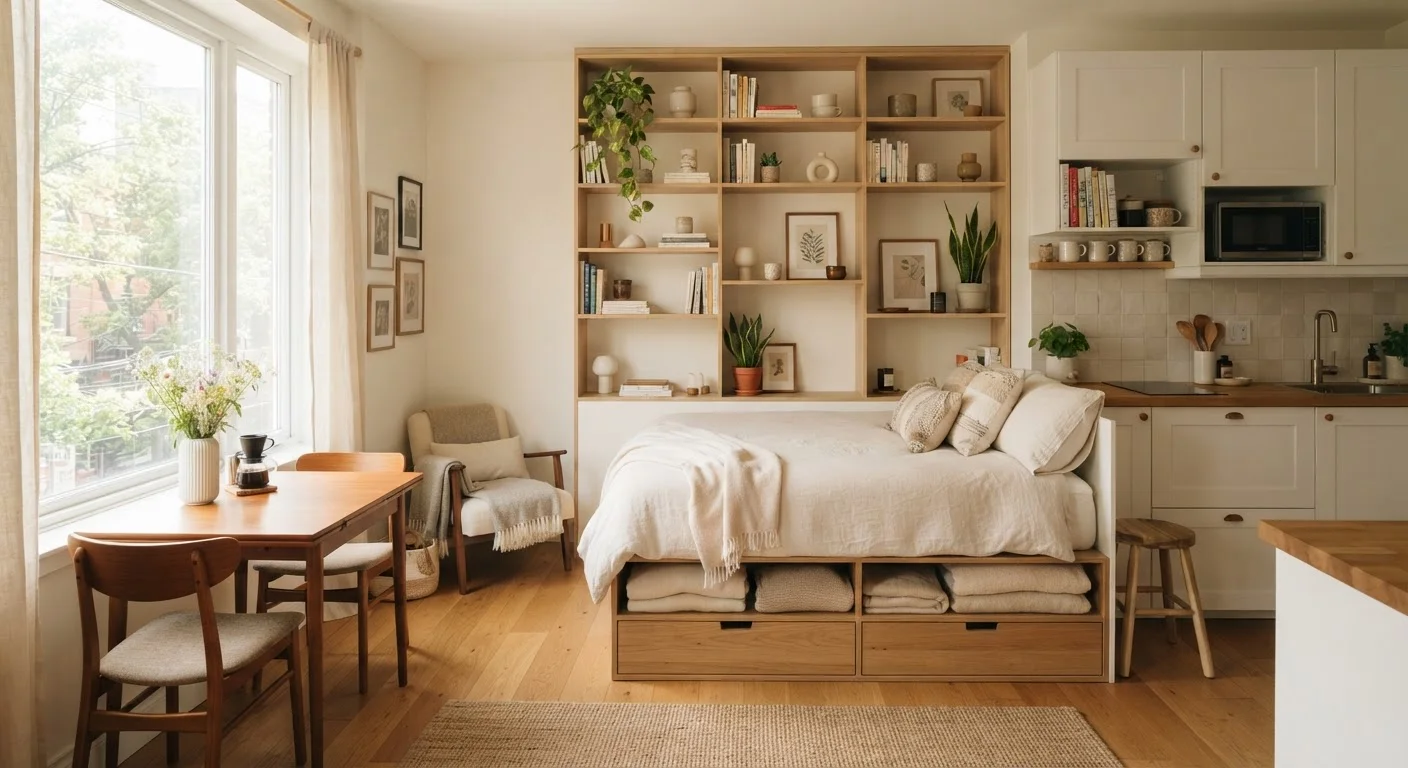
Floor space in small homes is precious, but walls and the space above eye level are frequently wasted. Shelving, wall-mounted hooks, and over-door organizers extend your usable storage without shrinking your living area.
Choose furniture that does more than one job.
Multi-function furniture - a bed with under-mattress drawers, an ottoman that opens for storage, a dining bench with a hinged lid - multiplies usable space without multiplying square footage. Each piece that serves two purposes effectively frees up the footprint of an entire item.
Apply a one-in, one-out rule for categories that tend to grow.
Clothing, kitchen gadgets, books, and hobby supplies have a tendency to quietly multiply in small spaces. Committing to removing one item whenever a new one enters keeps these categories from gradually outgrowing their storage.
Audit overlooked areas where clutter quietly accumulates.
Junk drawers, under-sink cabinets, entryway floors, and the space behind doors are invisible to daily awareness but can quietly drain a home's efficiency. Periodically reviewing these spots prevents slow accumulation from becoming an overwhelming backlog.
If you're starting from scratch - or returning to a space that's gotten away from you - the room-by-room decluttering guide is a practical place to begin before implementing any new storage system.
Quick Actions You Can Take Today
Organization doesn't require a full weekend and a budget. Some of the highest-impact changes are small resets you can do in under an hour. Start with one of these and build from there.
For renters navigating what's possible without drilling into walls or making permanent changes, it's worth understanding how your housing situation shapes your options before investing in storage solutions.
Maintaining the System Over Time
Most organization failures aren't failures of design - they're failures of maintenance. A system that works well in week one will collapse by month three if there's no habit holding it in place.
Build the Reset Into Your Routine
Rather than scheduling a big organization session once a month, attach a brief tidy to something you already do daily - like after dinner or before your morning coffee. Habit stacking (linking a new behavior to an existing one) is one of the most reliable ways to make a routine stick in a small space where visual disorder is hard to ignore.
The key is frequency over intensity. A five-minute reset each evening - surfaces cleared, items returned to their assigned homes - does more to sustain a small space than a major re-organization every few months. If you share your home with others, aligning on shared expectations early makes a real difference; the challenges of organizing when multiple people have different habits are real, but addressable with clear communication.
It's also worth revisiting your system seasonally. What worked when you moved in may not work after a year of accumulation, a new hobby, or a change in routine. Treat your organization setup as a living structure - something you maintain and adjust rather than solve once and forget. For a broader look at building habits that hold up under real-life pressure, the guide to sustainable habits for busy people offers useful framing that applies directly to home routines.