

Key Takeaways
- Vertical storage frees floor space and suits tall-ceilinged rooms, but requires accessible retrieval for frequently used items.
- Horizontal storage is easier to access and more stable for heavy or fragile items, but consumes more floor area.
- The best approach in most rooms is a deliberate combination of both directions.
- Renters and those in smaller spaces often benefit more from vertical strategies with fewer permanent fixtures.
- Room function and user habits should drive storage direction - not trends or aesthetics alone.
Option A
Vertical Storage
The space-multiplier that goes up instead of out.
Best for: Rooms with limited floor space, high ceilings, or a need to keep surfaces and pathways clear.
Option B
Horizontal Storage
The grounded, accessible approach built for ease of use.
Best for: Rooms where accessibility, stability, and lower visual weight are priorities, or ceilings are low.
If you live in a small apartment or studio with limited square footage
Vertical Storage
Going up rather than out preserves walkable floor space and can make a compact room feel taller and less cluttered.
If you're organizing a garage, basement, or workshop with heavy tools and equipment
Horizontal Storage
Low, stable shelving and cabinets handle weight more safely and keep heavy items accessible without climbing or reaching overhead.
If you're furnishing a shared household with multiple users of different heights and abilities
Horizontal Storage
Mid-height, horizontal layouts are easier for most people to access independently without stools or assistance.
If you want to make a living or dining room feel more curated and functional
Vertical Storage
Tall shelving draws the eye upward and consolidates display and storage into a single visual anchor point.
If you're organizing a kitchen with a mix of daily-use and occasional items
Vertical Storage
Upper cabinets and wall-mounted options keep counters clear while keeping daily items reachable at mid-height - reserving horizontal space for prep and appliances.
Understanding the Core Difference
At its most basic, vertical storage uses height - think wall-mounted shelving, tall bookcases, pegboards, over-door organizers, and stacked cabinet units. Horizontal storage spreads across floor space - think low credenzas, storage benches, wide dressers, under-bed bins, and countertop organizers.
Neither approach is inherently superior. The meaningful question is always: what does this specific room need, and how do the people using it actually behave? If you're working through your home organization approach for the first time, this grounded introduction to home organization can help you frame these decisions before purchasing anything.
| Criterion | Vertical Storage | Horizontal Storage |
|---|---|---|
| Floor space used | Minimal footprint | Larger footprint required |
| Accessibility | Varies by height of item | Generally easier to reach |
| Weight capacity | Lower (wall anchoring dependent) | Higher (floor-supported) |
| Best ceiling height | 8 ft or higher | Works in any ceiling height |
| Visual effect on room | Makes room feel taller | Keeps visual weight low and calm |
| Renter-friendly options | Freestanding units; some limits | Widely compatible |
| Ideal room types | Kitchens, offices, living rooms | Garages, bedrooms, basements |
Where Vertical Storage Works Best
Vertical storage earns its keep in rooms where floor space is limited and ceiling height allows it. Living rooms, home offices, kitchens, and laundry areas all benefit from walls being treated as functional real estate rather than blank backdrops.
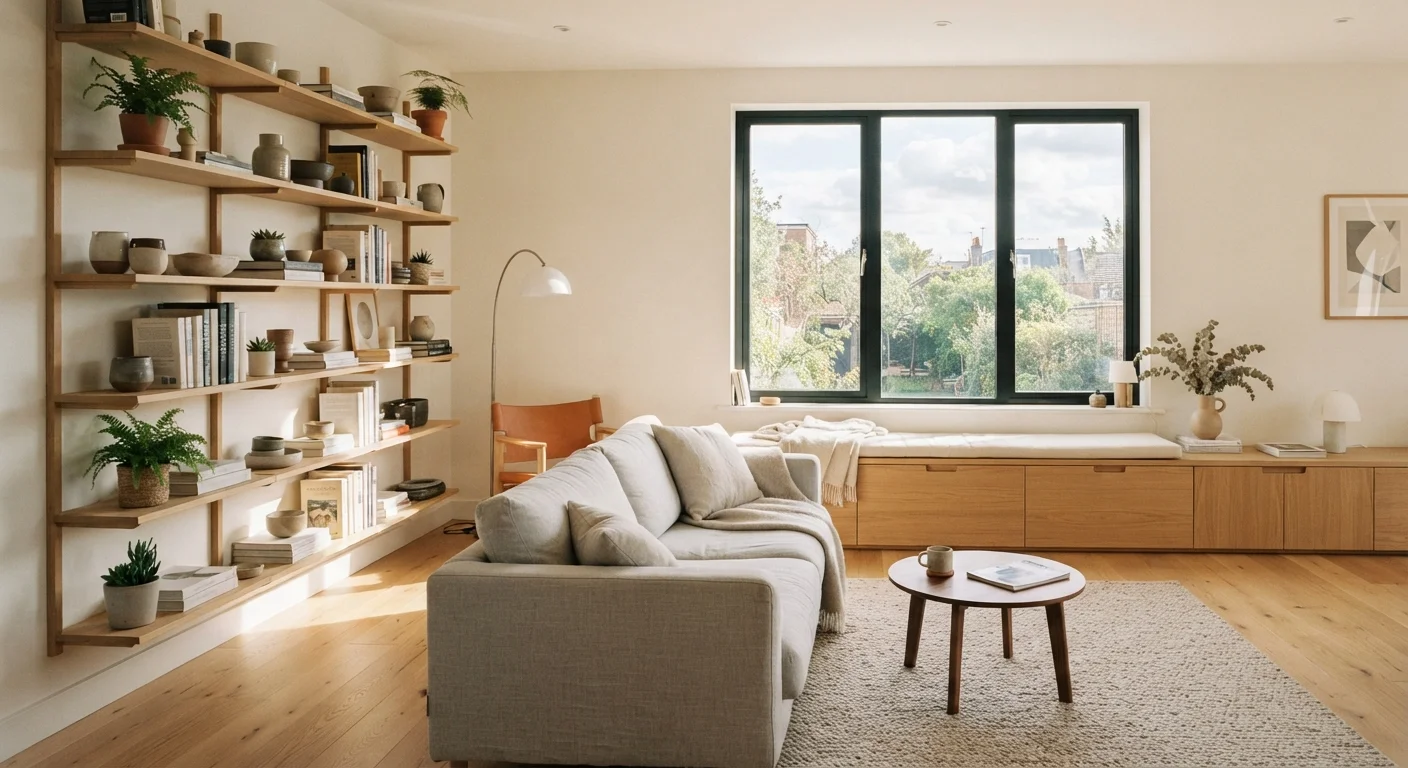
Tall open shelving in a living room consolidates books, objects, and media gear into one visual zone. In a kitchen, upper cabinets and wall-mounted spice racks keep counters clear for actual work. In a home office, a floor-to-ceiling shelving unit can hold files, supplies, and reference materials without consuming desk or floor space.
The key limitation: what's stored high should be retrieved infrequently. Items you reach for daily - coffee mugs, frequently used tools, children's toys - should live at a comfortable arm height, not at the top of an eight-foot shelving run. Vertical storage rewards thoughtful item placement, not just upward stacking.
For smaller homes and apartments, the logic is especially compelling. Organization principles built for compact spaces often lean heavily on vertical solutions precisely because horizontal real estate is scarce.
~340 sq ft
Average US apartment size (studio)
According to U.S. Census Bureau data, studio apartments average around 340 square feet - a scale where every square foot of floor space saved through vertical storage carries real practical value.
8-9 ft
Standard US residential ceiling height
Most American homes built after the 1990s have 8-9 foot ceilings, giving meaningful vertical storage potential that many households leave underused.
Where Horizontal Storage Works Best
Horizontal storage tends to be the better choice when weight, accessibility, or visual calm are the primary concerns. Garages and workshops storing heavy tools, pantries housing bulk items, and bedrooms where low-profile furniture supports restful aesthetics all suit the horizontal approach.
Lower storage is physically easier to access for most users - no step stools, no overhead reaching. This matters in shared households where users have different heights, ages, or mobility levels. When multiple people share a home with different habits, accessible mid-height and low storage tends to reduce friction for everyone.
Horizontal storage also tends to offer more structural stability for heavier loads. Under-bed storage, wide sideboards, and deep shelving units distribute weight closer to the floor - a practical advantage in utility-focused spaces.
The trade-off: horizontal storage consumes floor area. In tight rooms, it can make the space feel smaller and leave walking paths cramped. This is where discipline in what you store - not just how - makes the biggest difference. Zones, labels, and storage limits are foundational habits that keep horizontal systems from becoming sprawl.
Combining Both in Practice
Most functional rooms use both directions - the question is proportion and purpose. A kitchen might rely on vertical wall cabinets for dishes and dry goods, while horizontal lower cabinets hold pots, pans, and heavier appliances. A bedroom might have a tall wardrobe alongside a low storage bench at the foot of the bed.
A useful mental framework: assign frequency of access to height. Daily items at arm level, occasional items above or below, and rarely needed items in the least convenient spots - whether that's the top shelf or the deepest under-bed bin.
Renters face specific constraints here. Wall-mounted vertical systems often require drilling or anchoring that some leases prohibit. How your housing situation shapes your storage options is worth reading before committing to any system that involves permanent wall fixtures. Freestanding vertical units - bookcases, shelving towers, wardrobe systems - are often the practical middle ground.
A Note on Wall-Mounted Storage Safety
Any shelving or cabinet system anchored to a wall should be secured into wall studs or with appropriate wall anchors rated for the intended load. Improperly anchored vertical storage - particularly tall, heavy units - poses a tipping hazard, especially in homes with children. If you're unsure about your wall type or load capacity, consult a handyperson or contractor before installation.
The rooms people tend to overlook when thinking about storage direction are often the ones causing the most daily friction. Spaces people forget to organize often respond well to a deliberate vertical-versus-horizontal audit once you know what to look for.